

What is the static accuracy of a Profile End Milling Machine?
What is the static accuracy of a Profile End Milling Machine?
In the realm of manufacturing, Profile End Milling Machines play a crucial role in shaping and finishing profiles with precision. As a leading supplier of Profile End Milling Machines, I often encounter inquiries regarding the static accuracy of these machines. In this blog post, I will delve into the concept of static accuracy, its significance in the performance of a Profile End Milling Machine, and how it impacts the overall quality of the machining process.
Understanding Static Accuracy
Static accuracy refers to the ability of a machine tool to maintain its geometric accuracy when it is at rest, without any dynamic forces acting on it. In the context of a Profile End Milling Machine, static accuracy encompasses several key aspects, including linear positioning accuracy, angular positioning accuracy, straightness, flatness, and perpendicularity. These geometric parameters are essential for ensuring that the machine can produce parts with the desired dimensions and surface finish.
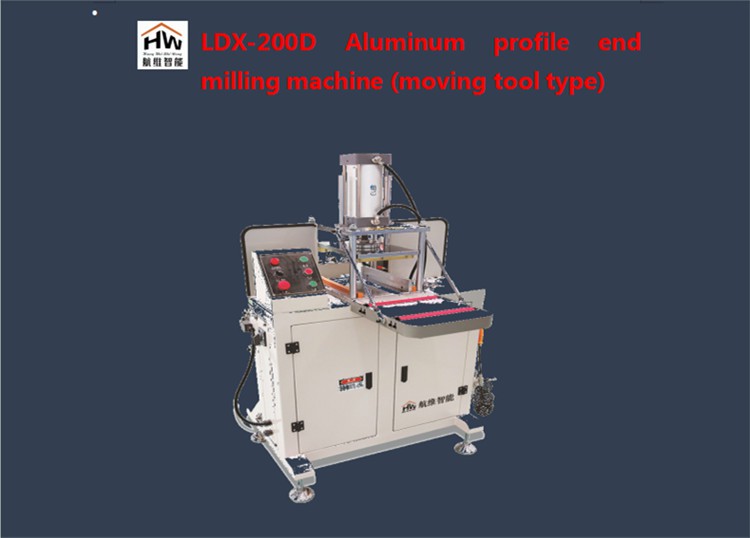

Linear positioning accuracy is a measure of how accurately the machine can move its axes in a straight line. It is typically expressed in terms of the maximum deviation from the desired position over a specified distance. For example, if a machine has a linear positioning accuracy of ±0.01 mm over a travel distance of 500 mm, it means that the actual position of the axis can deviate by up to 0.01 mm from the commanded position within that 500 mm range.
Angular positioning accuracy, on the other hand, relates to the ability of the machine to rotate its axes to a specific angle with a high degree of precision. Similar to linear positioning accuracy, it is also expressed as the maximum deviation from the desired angle. This parameter is particularly important when machining parts that require precise angular features, such as bevels or chamfers.
Straightness refers to the degree to which a machine's axis moves in a perfectly straight line. Deviations from straightness can result in parts with uneven surfaces or incorrect dimensions. Flatness is a measure of how flat a surface is, and it is crucial for ensuring that the machined parts have a consistent thickness and surface quality. Perpendicularity, meanwhile, refers to the relationship between two axes or surfaces, and it is essential for maintaining the correct orientation of the machined parts.
Significance of Static Accuracy in Profile End Milling Machines
The static accuracy of a Profile End Milling Machine is of utmost importance for several reasons. Firstly, it directly affects the dimensional accuracy of the machined parts. In industries where tight tolerances are required, such as aerospace, automotive, and medical device manufacturing, even the slightest deviation from the desired dimensions can render the parts unusable. A machine with high static accuracy can consistently produce parts within the specified tolerances, ensuring that they meet the required quality standards.
Secondly, static accuracy plays a crucial role in the surface finish of the machined parts. When a machine has poor static accuracy, it can cause vibrations and chatter during the machining process, which can result in rough surfaces and visible tool marks. On the other hand, a machine with high static accuracy can maintain a stable cutting process, resulting in smooth and high-quality surfaces.
In addition, static accuracy also impacts the efficiency and productivity of the machining process. A machine with poor static accuracy may require frequent adjustments and corrections, which can lead to longer setup times and increased downtime. In contrast, a machine with high static accuracy can operate more consistently and reliably, reducing the need for manual intervention and improving overall productivity.
Factors Affecting Static Accuracy
Several factors can affect the static accuracy of a Profile End Milling Machine. One of the most significant factors is the quality of the machine's components and construction. High-quality components, such as precision ball screws, linear guides, and servo motors, can significantly improve the machine's accuracy and repeatability. Additionally, a rigid and well-designed machine structure can minimize vibrations and deflections, further enhancing the static accuracy.
The installation and alignment of the machine also play a crucial role in its static accuracy. Proper installation ensures that the machine is level and stable, while accurate alignment of the axes ensures that they are parallel and perpendicular to each other. Any errors in the installation or alignment process can result in reduced static accuracy and poor machining performance.
Another factor that can affect static accuracy is the operating environment. Temperature fluctuations, humidity, and vibration can all cause the machine's components to expand, contract, or vibrate, leading to changes in its geometric accuracy. Therefore, it is essential to operate the machine in a controlled environment and take appropriate measures to minimize the effects of these environmental factors.
Measuring and Maintaining Static Accuracy
To ensure that a Profile End Milling Machine maintains its static accuracy over time, it is necessary to regularly measure and monitor its geometric parameters. This can be done using various measuring instruments, such as laser interferometers, dial indicators, and coordinate measuring machines (CMMs). These instruments can provide accurate and reliable measurements of the machine's linear and angular positioning accuracy, straightness, flatness, and perpendicularity.
In addition to regular measurements, it is also important to perform routine maintenance on the machine to keep it in optimal condition. This includes lubricating the moving parts, cleaning the machine, and checking for any signs of wear or damage. By following a regular maintenance schedule, you can prevent potential problems from developing and ensure that the machine continues to operate with high static accuracy.
Conclusion
In conclusion, the static accuracy of a Profile End Milling Machine is a critical factor that determines its performance and the quality of the machined parts. By understanding the concept of static accuracy, its significance, and the factors that affect it, you can make informed decisions when selecting a machine and ensure that it meets your specific requirements.
As a supplier of Profile End Milling Machines, we are committed to providing our customers with high-quality machines that offer excellent static accuracy and performance. Our Aluminum Profile CNC Tenon Milling Machine, Aluminum Profile Tenon Milling Machine, and CNC Door Window Milling Tenon Machine are all designed and manufactured to the highest standards, ensuring that they can deliver precise and reliable machining results.
If you are interested in learning more about our Profile End Milling Machines or would like to discuss your specific machining requirements, please do not hesitate to contact us. Our team of experts will be happy to assist you and provide you with the information you need to make the right decision.
References
- Smith, J. (2018). Precision Machining: Principles and Applications. New York: McGraw-Hill.
- Brown, A. (2019). Machine Tool Accuracy and Performance. London: Elsevier.
- Jones, R. (2020). Manufacturing Engineering and Technology. Boston: Prentice Hall.