

What is the role of the guide rails in milling tenon equipment?
In the manufacturing industry, milling tenon equipment plays a crucial role in shaping and joining materials, especially in the production of wooden furniture, aluminum profiles for windows and doors, and other precision components. As a reliable supplier of milling tenon equipment, I am often asked about the various components of our machines and their functions. One such component that is frequently inquired about is the guide rail. In this blog post, I will delve into the significance and role of guide rails in milling tenon equipment.
1. Fundamental Understanding of Guide Rails in Milling Tenon Equipment
Guide rails are essential structural components in milling tenon equipment. They are designed to provide a stable and accurate path for the moving parts of the machine, such as the cutting head, worktable, or other auxiliary devices. By guiding the movement of these parts, guide rails ensure that the milling process is carried out precisely and consistently.
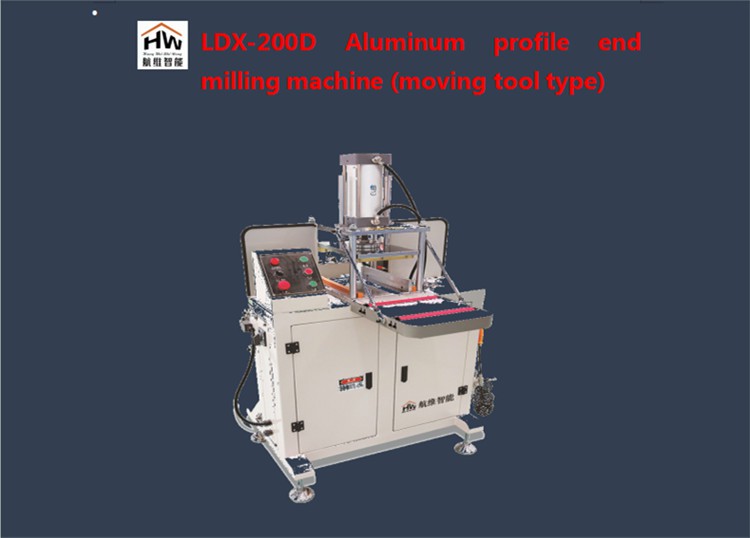
In our Profile End Milling Machine, for example, the guide rails are carefully engineered to support the movement of the cutting head along the profile. This allows for smooth and accurate cutting of tenons at the ends of the profiles, which is crucial for achieving a perfect fit when joining the profiles together.
2. Ensuring Precision and Accuracy
One of the primary roles of guide rails in milling tenon equipment is to ensure precision and accuracy in the milling process. The guide rails are machined to very high tolerances, which means that they can provide a straight and stable path for the moving parts of the machine. This is particularly important when milling tenons, as even the slightest deviation from the intended path can result in a poor fit between the tenon and the mortise, leading to weak joints and reduced product quality.
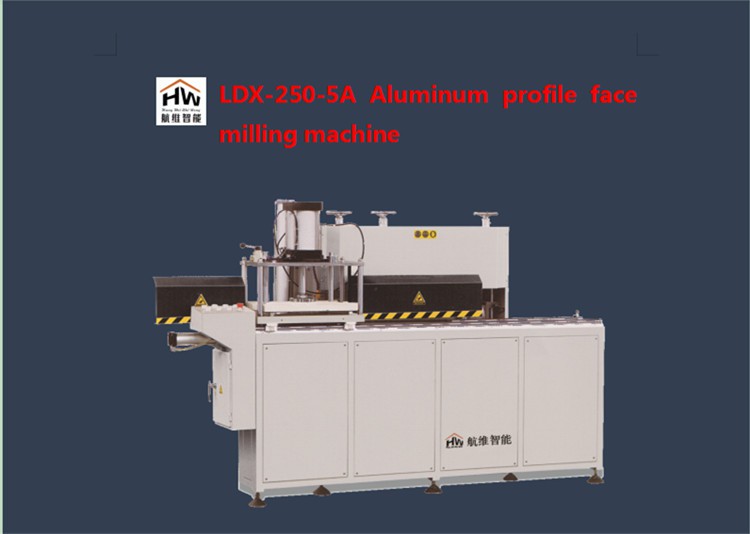
In our Aluminum Profile Tenon Milling Machine, the guide rails are made from high-quality materials and are subjected to rigorous quality control measures during the manufacturing process. This ensures that they can maintain their accuracy over a long period of time, even under heavy use. As a result, our customers can expect consistent and precise tenon milling results, which is essential for producing high-quality aluminum profiles for windows and doors.
3. Supporting Heavy Loads
Milling tenon equipment often needs to handle heavy loads, especially when milling large or thick profiles. The guide rails in these machines are designed to support these heavy loads without deforming or bending. This is achieved through the use of strong and durable materials, as well as a robust design that distributes the load evenly across the guide rails.
In our Aluminum Window CNC Milling Machine, the guide rails are made from high-strength steel and are reinforced with additional support structures. This allows the machine to handle large aluminum profiles with ease, while still maintaining its precision and accuracy. The ability to support heavy loads also means that our machines can be used for a wide range of applications, from small-scale production to large-scale industrial manufacturing.
4. Reducing Friction and Wear
Friction and wear are common problems in any moving machinery, and milling tenon equipment is no exception. The guide rails in these machines are designed to reduce friction and wear, which helps to extend the lifespan of the machine and improve its performance.
This is typically achieved through the use of special coatings or lubricants on the guide rails. These coatings and lubricants help to reduce the friction between the moving parts of the machine, which in turn reduces wear and tear on the guide rails. In addition, the guide rails are often designed with a smooth surface finish, which further reduces friction and wear.
5. Enhancing Machine Stability
Stability is another important factor in milling tenon equipment. The guide rails play a crucial role in enhancing the stability of the machine by providing a solid foundation for the moving parts. This helps to prevent vibrations and oscillations during the milling process, which can affect the accuracy and quality of the tenon milling.
In our milling tenon equipment, the guide rails are carefully integrated into the machine's frame, which helps to distribute the forces generated during the milling process evenly across the machine. This results in a more stable and reliable machine, which can produce high-quality tenons consistently.
6. Facilitating Maintenance and Repair
Guide rails in milling tenon equipment are also designed to facilitate maintenance and repair. They are often modular in design, which means that they can be easily removed and replaced if necessary. This reduces the downtime of the machine and makes it easier to perform routine maintenance tasks, such as cleaning and lubrication.
In addition, the guide rails are designed to be accessible, which allows for easy inspection and adjustment. This helps to ensure that the guide rails are always in good working condition, which is essential for maintaining the precision and accuracy of the machine.
7. Conclusion and Call to Action
In conclusion, guide rails play a vital role in milling tenon equipment. They ensure precision and accuracy, support heavy loads, reduce friction and wear, enhance machine stability, and facilitate maintenance and repair. As a leading supplier of milling tenon equipment, we understand the importance of high-quality guide rails in achieving optimal performance and product quality.
If you are in the market for milling tenon equipment, we invite you to contact us to discuss your specific needs. Our team of experts will be happy to provide you with more information about our products and how they can benefit your business. Whether you are looking for a Profile End Milling Machine, an Aluminum Profile Tenon Milling Machine, or an Aluminum Window CNC Milling Machine, we have the right solution for you.
References
- Groover, M. P. (2010). Fundamentals of Modern Manufacturing: Materials, Processes, and Systems. Wiley.
- Kalpakjian, S., & Schmid, S. R. (2014). Manufacturing Engineering and Technology. Pearson.
- Lindberg, R. F. (2007). Machine Tool Practices. Cengage Learning.