

What is the production capacity of a Profile Tenon Milling Machine per hour?
Hey there! As a supplier of Profile Tenon Milling Machines, I often get asked about the production capacity of these machines per hour. It's a crucial question for businesses looking to optimize their manufacturing processes and boost efficiency. So, let's dive right in and explore what goes into determining the hourly production capacity of a Profile Tenon Milling Machine.
Understanding the Basics
First off, what exactly is a Profile Tenon Milling Machine? Well, it's a specialized piece of equipment used to create tenons on various profiles, typically made of materials like aluminum. These tenons are essential for joining different parts together, providing a strong and secure connection. There are different types of Profile Tenon Milling Machines available, such as the Aluminum Profile CNC Tenon Milling Machine and the Aluminum Alloy Tenon Milling Equipment.
Factors Affecting Production Capacity
The production capacity of a Profile Tenon Milling Machine per hour isn't a one - size - fits - all number. It depends on several key factors:
1. Machine Type and Specifications
Different machines come with different capabilities. For example, a basic manual Profile Tenon Milling Machine might have a lower production capacity compared to a fully automated CNC (Computer Numerical Control) machine. CNC machines can be programmed to perform complex operations with high precision and speed. They can also run continuously without much human intervention, which significantly increases their hourly output. Our Aluminum Profile Tenon Milling Machine is available in both manual and CNC versions, allowing you to choose the one that best suits your production needs.
2. Material and Profile Complexity
The type of material being milled and the complexity of the profile also play a big role. Softer materials like aluminum are generally easier and faster to mill compared to harder materials. Additionally, if the profile has intricate designs or multiple tenons, it will take more time to mill. For instance, a simple straight tenon on a flat aluminum profile can be produced much quicker than a curved tenon on a complex - shaped profile.
3. Cutting Tools and Their Condition
The quality and condition of the cutting tools are crucial. Sharp and well - maintained cutting tools can make clean and fast cuts, increasing the production speed. Dull or worn - out tools, on the other hand, can slow down the milling process, cause poor - quality cuts, and even damage the machine. Regularly replacing and maintaining the cutting tools is essential for maximizing the production capacity.
4. Operator Skill and Experience
An experienced operator can make a huge difference in the production capacity. They know how to set up the machine correctly, optimize the cutting parameters, and troubleshoot any issues that may arise during the milling process. A skilled operator can also work more efficiently, reducing the time between each milling operation.
Estimating Production Capacity
While it's difficult to give an exact number for the production capacity per hour, we can provide a rough estimate based on common scenarios.
For a small - scale manual Profile Tenon Milling Machine working on simple aluminum profiles, it might be able to produce around 10 - 20 tenons per hour. This is assuming that the operator is moderately skilled and the profiles are straightforward.
A mid - range CNC Profile Tenon Milling Machine, on the other hand, can produce anywhere from 50 - 100 tenons per hour, depending on the factors mentioned above. These machines are more efficient because they can perform multiple operations simultaneously and run continuously with minimal downtime.

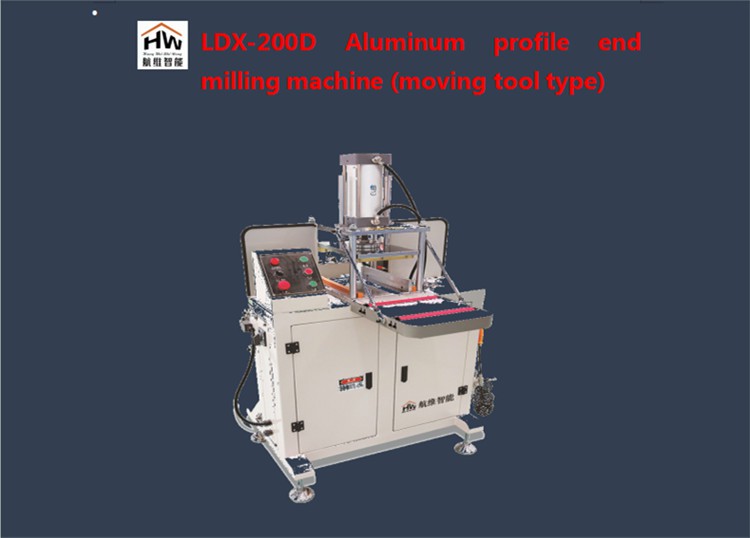
For large - scale, high - end CNC machines used in industrial settings, the production capacity can go even higher, reaching 150 - 200 tenons per hour or more. These machines are designed for high - volume production and are often equipped with advanced features like automatic loading and unloading systems.
Optimizing Production Capacity
If you're looking to increase the production capacity of your Profile Tenon Milling Machine, here are some tips:
1. Upgrade to a CNC Machine
If you're still using a manual machine, upgrading to a CNC machine can significantly boost your production speed. CNC machines offer greater precision, flexibility, and automation, allowing you to produce more tenons in less time.
2. Use High - Quality Cutting Tools
Invest in high - quality cutting tools and replace them regularly. This will ensure clean and fast cuts, reducing the milling time and improving the overall quality of the tenons.
3. Train Your Operators
Provide comprehensive training to your operators to enhance their skills and knowledge. This will enable them to operate the machine more efficiently and troubleshoot any problems quickly.
4. Optimize the Workflow
Streamline your production process by organizing the materials, tools, and workstations in an efficient way. Minimize the time spent on setting up the machine and transferring the profiles between operations.
Conclusion
The production capacity of a Profile Tenon Milling Machine per hour varies widely depending on several factors, including the machine type, material, profile complexity, cutting tools, and operator skill. By understanding these factors and taking steps to optimize them, you can increase the production capacity of your machine and improve your overall manufacturing efficiency.
If you're interested in learning more about our Profile Tenon Milling Machines or discussing your specific production needs, feel free to reach out. We're here to help you find the right machine for your business and ensure that you get the most out of it. Whether you're a small - scale workshop or a large - scale industrial manufacturer, we have the solutions to meet your requirements. Contact us today to start a conversation about how we can help you boost your production capacity and take your business to the next level.
References
- General knowledge of Profile Tenon Milling Machines from industry experience.
- Technical specifications of our company's Profile Tenon Milling Machines.