

What is the feed system of a Profile End Milling Machine?
In the realm of precision machining, the Profile End Milling Machine stands as a cornerstone, enabling the creation of intricate profiles and precise tenons on various materials. As a leading supplier of Profile End Milling Machines, I am delighted to delve into the topic of its feed system, a crucial component that significantly impacts the machine's performance and the quality of the end products.
Understanding the Feed System
The feed system of a Profile End Milling Machine is responsible for moving the workpiece or the cutting tool at a controlled rate during the machining process. This movement is essential for achieving accurate cuts, consistent profiles, and efficient production. There are two primary types of feed systems commonly used in Profile End Milling Machines: manual and automatic.
Manual Feed System
A manual feed system requires the operator to control the movement of the workpiece or the cutting tool using handwheels or levers. This type of feed system is simple, cost - effective, and suitable for small - scale production or when high precision is not required. However, it is labor - intensive and may lead to inconsistencies in the machining process due to human error.
Automatic Feed System
An automatic feed system, on the other hand, uses motors, drives, and control systems to move the workpiece or the cutting tool at a pre - determined rate. This type of feed system offers several advantages over the manual feed system, including higher precision, greater productivity, and reduced operator fatigue. Automatic feed systems can be further classified into two categories: hydraulic and electric.
Hydraulic Feed System
Hydraulic feed systems use hydraulic cylinders and pumps to generate the force required to move the workpiece or the cutting tool. These systems are known for their high power and ability to handle heavy loads. They are also relatively simple to maintain and can provide smooth and consistent feed rates. However, hydraulic systems can be noisy, and they require regular maintenance to prevent leaks and ensure proper operation.
Electric Feed System
Electric feed systems use electric motors and drives to control the movement of the workpiece or the cutting tool. These systems are more precise than hydraulic systems and can offer a wider range of feed rates. They are also quieter, more energy - efficient, and easier to integrate with computer numerical control (CNC) systems. Electric feed systems are commonly used in modern Profile End Milling Machines, especially those designed for high - precision machining.
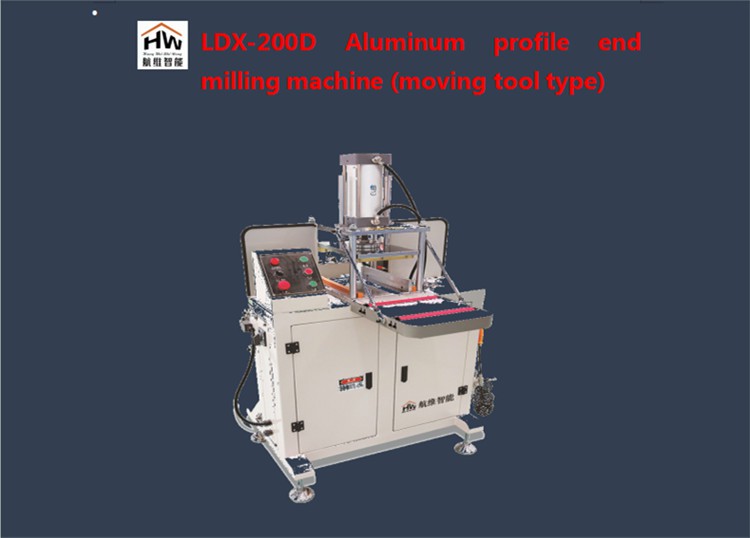

Components of an Automatic Feed System
An automatic feed system typically consists of the following components:
Motor
The motor is the primary source of power in an automatic feed system. It converts electrical energy into mechanical energy to drive the movement of the workpiece or the cutting tool. Electric motors used in Profile End Milling Machines can be either servo motors or stepper motors. Servo motors offer higher precision and faster response times, while stepper motors are more cost - effective and suitable for applications where high precision is not required.
Drive
The drive is responsible for controlling the speed and direction of the motor. It receives signals from the control system and adjusts the motor's output accordingly. Drives can be either analog or digital. Digital drives offer greater precision and flexibility and are commonly used in modern Profile End Milling Machines.
Control System
The control system is the brain of the automatic feed system. It allows the operator to set the desired feed rate, distance, and other parameters. The control system can be either a standalone unit or integrated into the CNC system of the Profile End Milling Machine. Modern control systems use advanced software algorithms to optimize the feed rate and ensure consistent and accurate machining.
Linear Guideways
Linear guideways provide a smooth and precise path for the movement of the workpiece or the cutting tool. They are designed to minimize friction and ensure high - speed and high - precision movement. Linear guideways are typically made of high - quality steel or aluminum and are coated with a low - friction material to reduce wear and tear.
Ball Screws
Ball screws are used to convert the rotational motion of the motor into linear motion. They offer high efficiency, accuracy, and load - carrying capacity. Ball screws are commonly used in Profile End Milling Machines to ensure precise movement of the workpiece or the cutting tool.
Importance of a Well - Designed Feed System
A well - designed feed system is essential for the optimal performance of a Profile End Milling Machine. Here are some of the key benefits:
Precision
The feed system directly affects the precision of the machining process. A precise feed system ensures that the cutting tool moves at a consistent rate, resulting in accurate profiles and tenons. This is particularly important in industries such as aerospace, automotive, and furniture manufacturing, where high precision is required.
Productivity
An efficient feed system can significantly increase the productivity of a Profile End Milling Machine. Automatic feed systems allow for continuous and rapid movement of the workpiece or the cutting tool, reducing the machining time and increasing the output. This is especially beneficial for large - scale production.
Quality
A well - designed feed system helps to improve the quality of the end products. By ensuring consistent feed rates and precise movement, it reduces the risk of errors and defects, resulting in high - quality profiles and tenons.
Operator Safety
An automatic feed system reduces the need for manual intervention, which improves operator safety. Operators are less likely to be exposed to moving parts and hazardous materials, reducing the risk of accidents and injuries.
Our Profile End Milling Machines and Feed Systems
At our company, we offer a wide range of Profile End Milling Machines equipped with advanced feed systems. Our machines are designed to meet the diverse needs of different industries, from small - scale workshops to large - scale manufacturing plants.
We provide CNC Door Window Milling Tenon Machine, which is ideal for the production of high - precision door and window components. These machines are equipped with state - of - the - art electric feed systems that offer high precision and productivity.
Our Aluminum Profile Tenon Milling Machine is specifically designed for machining aluminum profiles. It features a robust hydraulic feed system that can handle heavy loads and provide smooth and consistent feed rates.
For those in the window manufacturing industry, our Aluminum Window CNC Milling Machine is a great choice. It is equipped with an advanced electric feed system and a CNC control system, allowing for precise and efficient machining of aluminum window components.
Conclusion
The feed system is a critical component of a Profile End Milling Machine, playing a vital role in determining the machine's precision, productivity, and the quality of the end products. Whether you are in the market for a manual or an automatic feed system, it is important to choose a machine that is well - designed and reliable.
If you are interested in learning more about our Profile End Milling Machines or have any questions about the feed system, please do not hesitate to contact us. Our team of experts is ready to assist you in finding the perfect solution for your machining needs. We look forward to the opportunity to work with you and help you achieve your production goals.
References
- Smith, J. (2018). Precision Machining Handbook. New York: Industrial Press.
- Johnson, R. (2019). CNC Machining Technology. London: Elsevier.
- Brown, A. (2020). Feed Systems in Manufacturing. Chicago: McGraw - Hill.