

How to set up the machining parameters on a Profile Tenon Milling Machine?
Hey there! As a supplier of Profile Tenon Milling Machines, I've seen firsthand how crucial it is to set up the right machining parameters. It can make or break your project, affecting everything from the quality of the finished product to the efficiency of your production process. So, let's dive into how you can set up these parameters like a pro.
Understanding the Basics
Before we start setting up the parameters, it's important to understand what they are and how they work. The main machining parameters for a Profile Tenon Milling Machine include cutting speed, feed rate, depth of cut, and spindle speed.
Cutting speed is the speed at which the cutting tool moves relative to the workpiece. It's usually measured in surface feet per minute (SFM) or meters per minute (m/min). A higher cutting speed can increase productivity, but it can also lead to more wear and tear on the cutting tool.
Feed rate is the speed at which the workpiece moves through the cutting tool. It's measured in inches per revolution (IPR) or millimeters per revolution (mm/r). A higher feed rate can also increase productivity, but it can affect the surface finish of the workpiece.
Depth of cut is the amount of material removed by the cutting tool in a single pass. It's measured in inches or millimeters. A larger depth of cut can remove more material quickly, but it can also put more stress on the cutting tool and the machine.
Spindle speed is the rotational speed of the cutting tool. It's measured in revolutions per minute (RPM). The spindle speed needs to be adjusted based on the cutting speed and the diameter of the cutting tool.
Step-by-Step Setup
1. Know Your Material
The first step in setting up the machining parameters is to know the material you're working with. Different materials have different properties, such as hardness, toughness, and heat conductivity. For example, aluminum is a soft and lightweight material, while steel is harder and more difficult to cut.
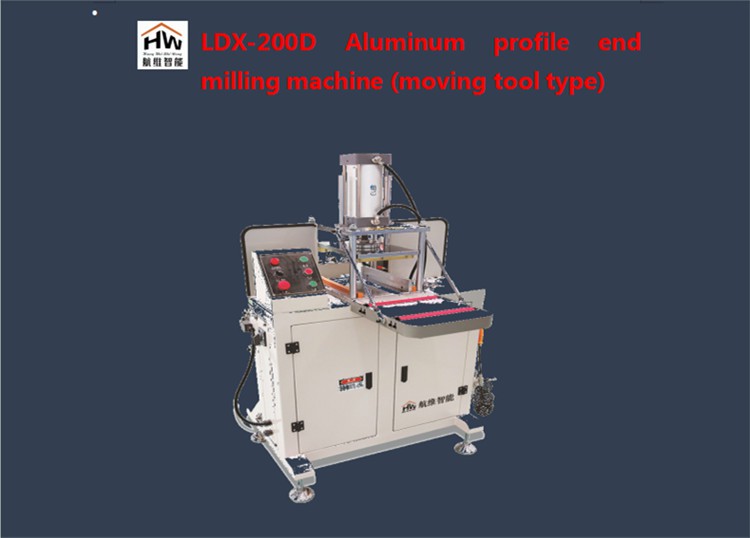
If you're working with aluminum, you can generally use higher cutting speeds and feed rates compared to steel. You can check out our Aluminum Profile Tenon Milling Machine for more details on machining aluminum profiles.
2. Select the Right Cutting Tool
The type of cutting tool you use also affects the machining parameters. There are different types of cutting tools available, such as end mills, ball mills, and face mills. Each type of cutting tool is designed for specific applications.
For example, if you're making a tenon on an aluminum window profile, you might want to use an end mill. You can find a suitable tool for this job with our Aluminum Window CNC Milling Machine.
3. Calculate the Cutting Speed
Once you know the material and the cutting tool, you can calculate the cutting speed. You can use a cutting speed calculator or refer to the cutting tool manufacturer's recommendations.
For example, if you're using a carbide end mill to cut aluminum, the recommended cutting speed might be around 800 - 1200 SFM. You can then adjust the spindle speed based on the cutting speed and the diameter of the cutting tool using the formula: RPM = (SFM x 3.82) / Diameter of the cutting tool.
4. Determine the Feed Rate
The feed rate depends on the cutting speed, the number of teeth on the cutting tool, and the material. As a general rule, you can start with a lower feed rate and gradually increase it until you find the optimal value.
For aluminum, a typical feed rate might be around 0.002 - 0.005 IPR per tooth. So, if your end mill has 4 teeth, the feed rate would be 0.008 - 0.02 IPR.
5. Set the Depth of Cut
The depth of cut should be based on the strength of the cutting tool and the machine, as well as the material. For a roughing operation, you can use a larger depth of cut, while for a finishing operation, a smaller depth of cut is usually better.
For example, when roughing aluminum, you might use a depth of cut of 0.1 - 0.2 inches, and for finishing, 0.01 - 0.03 inches.
6. Test and Adjust
After setting up the initial parameters, it's a good idea to do a test run. Check the surface finish of the workpiece, the amount of material removed, and the performance of the cutting tool. If the finish is rough, you might need to reduce the feed rate or the depth of cut. If the cutting tool is wearing out too quickly, you might need to adjust the cutting speed.
Tips and Tricks
- Lubrication: Using the right lubricant can reduce friction and heat, which can improve the tool life and the surface finish. For aluminum, a water-soluble coolant is often a good choice.
- Tool Inspection: Regularly inspect the cutting tool for wear and damage. A worn-out tool can affect the quality of the machining and increase the risk of breakage.
- Machine Maintenance: Keep your Profile Tenon Milling Machine in good condition. Regularly clean and lubricate the machine, and check the alignment of the components.
Conclusion
Setting up the machining parameters on a Profile Tenon Milling Machine might seem complicated at first, but with a little practice and understanding, you can get it right. Remember to consider the material, the cutting tool, and the specific requirements of your project.
If you're interested in our CNC Door Window Milling Tenon Machine or any of our other Profile Tenon Milling Machines, feel free to reach out to us for more information and to discuss your procurement needs. We're here to help you get the most out of your machining operations.

References
- Machinery's Handbook
- Cutting tool manufacturer's catalogs