

Can a Profile End Milling Machine work with different CAD/CAM software?
Hey there! As a supplier of Profile End Milling Machines, I often get asked if these machines can work with different CAD/CAM software. Well, let's dive right into it and find out!
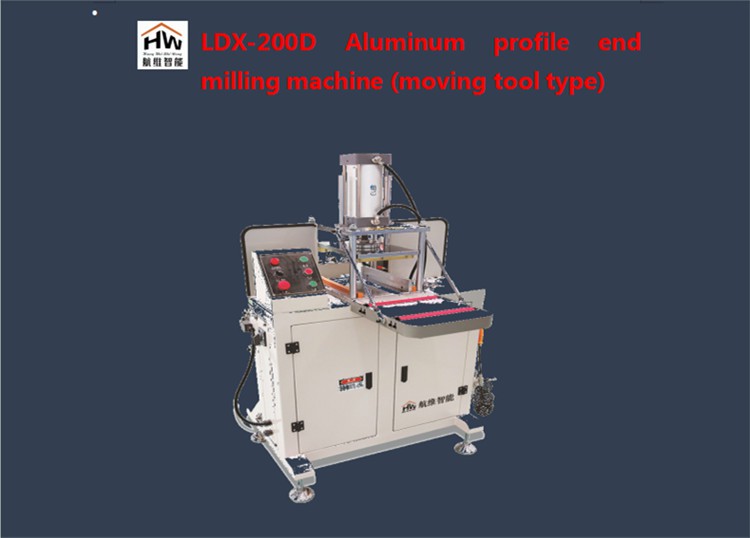
First off, what's a Profile End Milling Machine? It's a pretty nifty piece of equipment that's used to mill the ends of various profiles, like aluminum ones. We offer a range of these machines, such as the Aluminum Profile End Milling Machine and the Aluminum Profile Tenon Milling Machine. These machines are designed to be precise and efficient, making them great for all sorts of manufacturing jobs.
Now, let's talk about CAD/CAM software. CAD, or Computer-Aided Design, is used to create detailed 2D or 3D models of the parts you want to make. CAM, or Computer-Aided Manufacturing, takes those designs and turns them into instructions that the milling machine can understand. Different CAD/CAM software packages have their own features, interfaces, and file formats.
So, can a Profile End Milling Machine work with different CAD/CAM software? The short answer is, in most cases, yes! Most modern Profile End Milling Machines are designed to be flexible and compatible with a wide range of CAD/CAM software. This is because manufacturers know that customers might have their own preferences when it comes to software.
One of the key factors that determine compatibility is the file format. Most CAD/CAM software can export files in standard formats like DXF (Drawing Exchange Format) or STL (Stereolithography). Profile End Milling Machines can usually read these standard file formats, which means you can use different software to design your parts and then import the files into the machine's control system.
For example, if you're using a popular CAD software like AutoCAD, you can create your profile design and then export it as a DXF file. Then, you can transfer that file to the control system of our Milling Tenon Equipment. The machine will be able to read the file and start milling the part according to your design.
Another important aspect is the communication protocol. Some machines use standard communication protocols like G-code. G-code is a programming language that tells the machine how to move, what speed to use, and other important parameters. Many CAD/CAM software packages can generate G-code, so as long as your Profile End Milling Machine can understand G-code, you're good to go.
However, there are a few things to keep in mind. Not all software is created equal, and some might have more advanced features or better compatibility with certain types of machines. It's always a good idea to test the software with your machine before you start a big production run. You can do a small test part to make sure everything works as expected.
Also, some machines might require specific post-processors for different CAD/CAM software. A post-processor is a program that takes the output from the CAD/CAM software and converts it into a format that the machine can use. Our technical support team can help you set up the right post-processor for your machine and software combination.
In addition to compatibility, it's also important to consider the ease of use. Some CAD/CAM software is more user-friendly than others. You want to choose software that you and your team can easily learn and operate. This will save you time and reduce the chances of making mistakes.
Another thing to think about is the support and updates. Software companies usually provide support and regular updates to fix bugs, add new features, and improve compatibility. Make sure you choose software that has a good support team and a history of providing timely updates.
Let's talk about some of the benefits of being able to use different CAD/CAM software with your Profile End Milling Machine. First of all, it gives you more options. You're not locked into using just one software package. If you find a new software that has better features or a more intuitive interface, you can switch to it without having to buy a new machine.
Secondly, it allows you to work with different design teams. If you're collaborating with other companies or designers, they might use different CAD/CAM software. With a compatible Profile End Milling Machine, you can easily accept their designs and start production without any major issues.

Finally, it future-proofs your investment. As technology evolves, new CAD/CAM software will come out with better features and capabilities. By having a machine that can work with different software, you can take advantage of these new developments without having to replace your machine.
In conclusion, a Profile End Milling Machine can generally work with different CAD/CAM software. Thanks to standard file formats and communication protocols, you have the flexibility to choose the software that best suits your needs. Whether you're a small workshop or a large manufacturing plant, this compatibility gives you more options and makes your production process more efficient.
If you're interested in learning more about our Profile End Milling Machines and how they can work with different CAD/CAM software, or if you have any questions about purchasing one for your business, don't hesitate to get in touch. We're here to help you find the right solution for your manufacturing needs.
References
- General knowledge of CAD/CAM and Profile End Milling Machines in the manufacturing industry.
- Experience with different CAD/CAM software and their compatibility with Profile End Milling Machines.